Vinyl Heat Transfer & Sublimation Printing
Two powerful methods for custom apparel. Single-color vinyl (HTV) for clean logos and lettering. Full-color dye sublimation for all-over prints, sportswear, and photographic designs. Mimaki CMYK printers, plotter-cut vinyl, and AQL-inspected quality on every order.
Two methods — different strengths
Vinyl HTV and dye sublimation serve different purposes. Vinyl excels at clean, single-color graphics. Sublimation delivers unlimited-color, all-over prints. Here's a detailed breakdown of each.
Vinyl Heat Transfer (HTV)
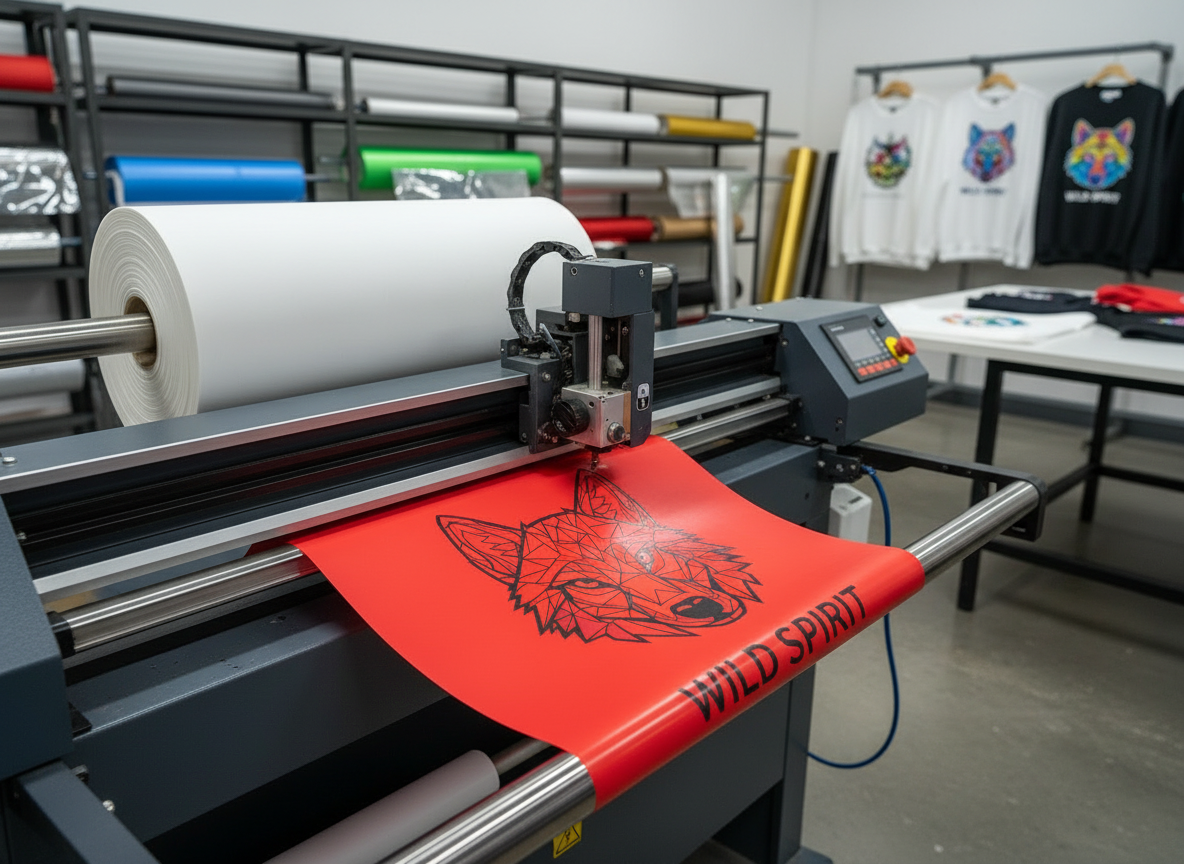
Vinyl heat transfer (HTV) uses pre-colored vinyl sheets that are precision-cut by a plotter and then heat-pressed onto the garment. Each color is a separate layer of vinyl, making it ideal for clean logos, names, numbers, and bold single-color or multi-layer designs. It's the go-to method for team names, jersey numbers, and crisp brand marks.
Step 1: Your design is loaded into the cutting software. Step 2: A plotter machine precision-cuts the design from colored vinyl sheet — cutting only the vinyl, not the backing. Step 3: Excess vinyl is weeded (removed) by hand, leaving only the design. Step 4: The cut vinyl is positioned on the garment and heat-pressed at ~150–160°C for 10–15 seconds. The adhesive bonds permanently to the fabric.
Works on cotton, polyester, poly-cotton blends, nylon, performance fabrics, and most woven and knit materials. HTV is one of the most versatile transfer methods — it bonds well to almost any fabric that can handle heat pressing.
Team jerseys (names & numbers), single-color logos, bold lettering, workwear branding, promotional items, small batch personalization, and any design with clean edges and solid colors.
Smooth, slightly raised vinyl surface. Thinner than screen print plastisol. Modern HTV films are soft and flexible — they stretch with the garment and don't crack.
Excellent. High-quality HTV withstands 50+ washes without peeling, cracking, or fading. Proper heat press settings and pressure are key — we dial in the exact profile for each vinyl type and fabric.
Dye Sublimation Printing
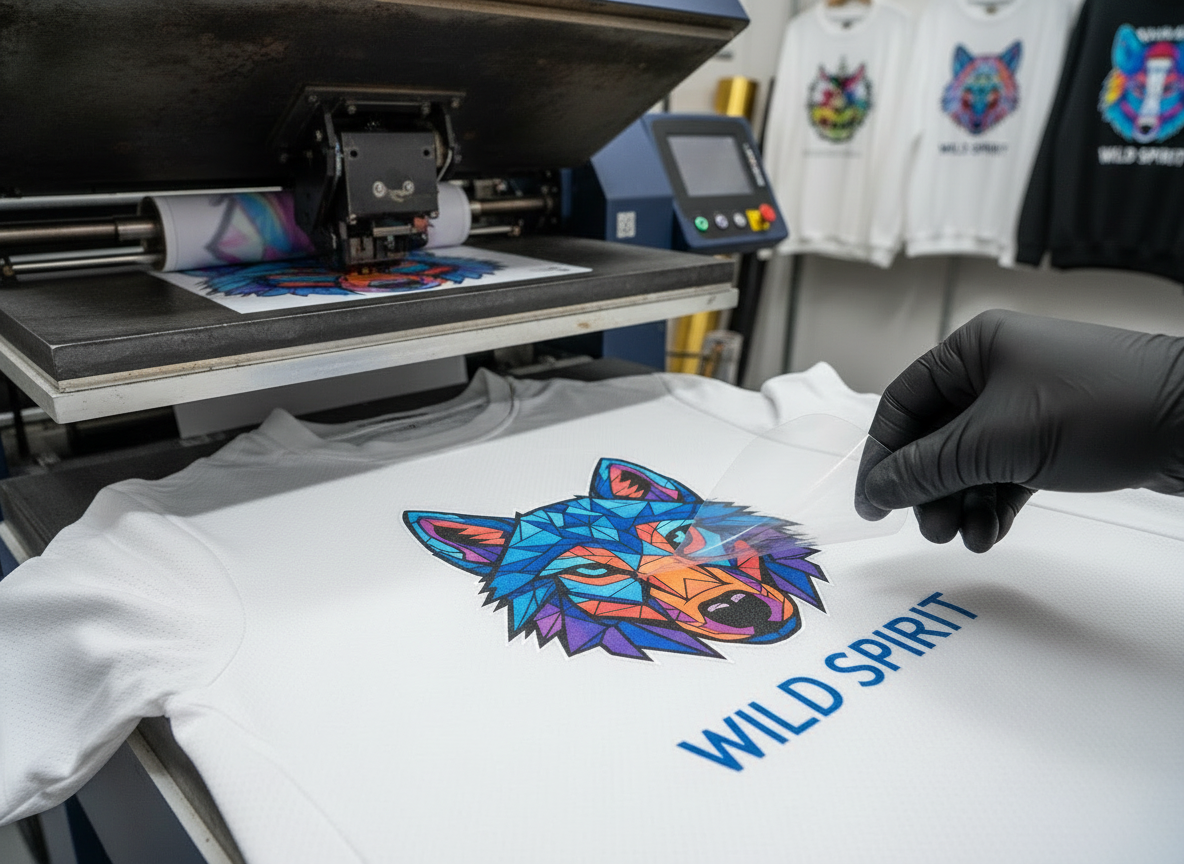
Dye sublimation uses heat to convert solid ink into gas, which permanently bonds with polyester fibers at a molecular level. The result is a vibrant, full-color print that becomes part of the fabric — it won't crack, peel, or fade. We use Mimaki CMYK printers with a 60-inch rotary heat transfer bed for production-scale sublimation.
Step 1: The design is printed in full color (CMYK) onto transfer paper using our Mimaki sublimation printer. Step 2: The transfer paper is placed on the polyester garment or fabric. Step 3: Using our 60" rotary heat press, heat (~200°C) and pressure convert the solid ink into gas. Step 4: The gas penetrates the polyester fibers and re-solidifies, permanently dyeing the fabric. The result is a print that IS the fabric — not a layer on top.
Best on 100% polyester and polyester-rich blends (85%+ polyester). Works on white or light-colored polyester only — the ink is transparent and won't show on dark fabrics. Ideal for performance fabrics, mesh, jersey knit, and microfiber.
All-over print sportswear, custom jerseys, full-color team uniforms, activewear, cycling kits, esports jerseys, fashion pieces with photographic or complex patterns, and any design that needs to cover the entire garment edge-to-edge.
Zero hand-feel. The dye becomes part of the fiber — there's no layer, no texture, no weight added. The fabric feels exactly the same as unprinted polyester. This is the softest possible print method.
Outstanding. Because the dye is bonded at a molecular level, sublimation prints don't crack, peel, or fade. Colors stay vibrant through 100+ washes. The print lasts as long as the garment itself.
Vinyl vs Sublimation: Side-by-Side Comparison
Vinyl HTV and sublimation serve different purposes. One excels at clean single-color graphics on any fabric. The other delivers unlimited-color, all-over prints on polyester. Here's how they compare.
Print method
Colors
Best fabrics
Feel / Finish
Durability
Coverage
Dark fabrics
Detail level
Setup cost
Best for
Not sure which method fits your project? Send us your artwork and fabric details — we'll recommend the best approach.
Get a recommendationOur Production Process — From Artwork to Delivery
Whether you choose vinyl HTV or sublimation, the production workflow is built for consistency, speed, and quality. Here's exactly what happens from the moment you reach out.
Send your artwork & details
Share your design files (vector for vinyl, high-res PNG/PDF for sublimation), garment type, fabric/GSM, quantities, and deadline. Include color references or a tech pack if you have one.
We recommend vinyl or sublimation
Based on your design complexity, fabric type, and production goals, we'll recommend the best method. Single-color logos on cotton? Vinyl. Full-color all-over on polyester? Sublimation. We'll confirm placement and color accuracy.
Sample production (~7 days)
We produce a physical sample with the exact method, materials, and garment. You review it, request changes if needed, and approve before bulk production begins.
Bulk production (~15 days)
Once approved, we lock the production profile and run. For vinyl: plotter cutting, weeding, and heat pressing each garment. For sublimation: Mimaki printing, rotary heat transfer, and finishing. Hourly QC audits throughout.
Final QC & packaging
Every order goes through AQL final inspection — print/transfer quality, color consistency, placement accuracy, measurements, labels, packaging, and needle detection. Full export documentation prepared.
International shipping
We ship via UPS, FedEx, or DHL to the USA and Europe. Express (~7 working days) or economical (~15 working days) — your choice. Full tracking provided.
Frequently asked questions
Quick answers to the most common questions about vinyl heat transfer and sublimation printing.
For the cleanest vinyl cuts, send vector artwork (AI, EPS, or PDF). The plotter follows the cut paths exactly — so clean vectors = clean transfers. Avoid raster images for vinyl.
For all-over prints, add 1–2 cm bleed beyond the garment edges. This ensures full coverage with no white gaps at seams. Send artwork at 300 DPI or higher for the sharpest results.
What's the difference between vinyl HTV and sublimation?+
Vinyl HTV is a pre-colored film cut by a plotter and heat-pressed onto the garment — best for single-color logos, names, and numbers on any fabric. Sublimation prints full-color CMYK ink onto transfer paper, then heat-bonds it into polyester fibers — best for all-over prints, photographic designs, and sportswear.
Can sublimation print on cotton?+
No. Sublimation only works on polyester or polyester-rich blends (85%+ polyester). The dye bonds with polyester fibers at a molecular level — it won't bond with cotton. For cotton, we recommend vinyl HTV, DTG, or screen printing instead.
Can vinyl HTV handle multi-color designs?+
Yes, but each color is a separate layer of vinyl. For 2–3 color designs, vinyl works great. For complex multi-color or photographic designs, sublimation or DTF is a better fit. We'll recommend the right method based on your artwork.
Will sublimation prints crack or peel?+
No. Sublimation dye becomes part of the polyester fiber — there's no layer on top to crack or peel. Colors stay vibrant through 100+ washes. It's the most durable print method available for polyester garments.
Can you do all-over prints (edge-to-edge)?+
Yes — sublimation is the best method for all-over prints. We use a Mimaki CMYK printer and a 60-inch rotary heat transfer bed, so we can print seamless, edge-to-edge designs on full garment panels before or after construction.
What's the minimum order quantity (MOQ)?+
Our standard MOQ is 20 pieces per design with full customization. Both vinyl and sublimation have no screen setup costs, so small runs are cost-effective. For custom fabric orders, the first batch requires 500 pieces.
How long does sampling and bulk production take?+
Sampling is typically ~7 working days. Bulk production is ~15 working days depending on complexity and quantities. We'll give you a clear timeline upfront.
What file formats should I send?+
For vinyl: vector files (AI, EPS, PDF) are required — the plotter needs clean cut paths. For sublimation: high-resolution PNG or PDF (300 DPI+) with full bleed. We also accept PSD and TIFF. If you're unsure, send what you have and we'll confirm.
Can sublimation print on dark-colored garments?+
No. Sublimation ink is transparent — it only shows on white or very light-colored polyester. For dark garments, we recommend vinyl HTV, DTF, or screen printing instead.
Do you ship to the U.S. and Europe?+
Yes. We ship internationally via UPS, FedEx, and DHL with full export documentation. Express shipping takes ~7 working days, economical ~15 working days.
Request a vinyl or sublimation quote
Share the basics and we'll come back with the best method (vinyl HTV or sublimation), timeline, and pricing. If you have a tech pack, include it — it speeds everything up.
Just tell us your fabric type and design — we'll recommend the right method. Cotton + single-color logo? Vinyl. Polyester + full-color all-over? Sublimation. No commitment needed.
We typically reply within a few hours.